
Clients
Founder Paul Kantner (who died in January of 2016 at age 74) knew that combining powerful creative forces, personalities and talents could create something far greater than the sum of its parts.
Between 1974 and 1984, Jefferson Starship released eight gold and platinum selling albums, twenty hit singles, sold out concerts worldwide and lived out legendary rock and roll escapades.
“Jefferson Starship was my creation…and it has this nice fluidity about it that allows any number of people to come in and do things with whatever Jefferson Starship is.” – Paul Kantner
Today’s Jefferson Starship remains dedicated to breathing new life into the living catalog of the Jeffersonian legacy, going to the edge, pushing the sonic boundaries and staying true to the original spirit of the music, on and off the stage.
Featuring original and historic members David Freiberg (also a founder of San Francisco luminaries Quicksilver Messenger Service) and drummer Donny Baldwin, along with longtime members Chris Smith on keyboards and synth bass, Jude Gold on lead guitar and GRAMMY Nominee Cathy Richardson anchoring the female lead vocal spot made famous by the inimitable Grace Slick. Richardson was invited by Ms. Slick to sing in her place when Jefferson Airplane accepted their Lifetime Achievement Award at the 2016 GRAMMY Salute to Legends concert and telecast.
The band keeps a hectic touring schedule bolstered by several television recent appearances including a one hour concert and interview special on DirecTVs Audience Network, My Music: 60s Pop, Rock and Soul on PBS and live with the Contemporary Youth Orchestra on AXS Network. The Freiberg-penned 1979 hit Jane is the theme song for the Netflix Original Series Wet, Hot American Summer. In 2014-15, the band played a series of free concerts for America’s Veterans and was subsequently awarded a Certificate of Appreciation from the US Department of Defense. Jefferson Starship has traveled the world playing in 20 countries across the globe in the last 3 years alone.
The music that defined a generation and spanned decades is alive and well and more relevant than ever in pop culture- songs such as Volunteers, White Rabbit, Wooden Ships, Somebody to Love, Today, Miracles, Count on Me, Fast Buck Freddie, Jane and Find Your Way Back continue to reverberate throughout the collective consciousness today.

Toots is one of the true architects of reggae – so much so that “Do the Reggay,” a 1968 single by Toots and his group, the Maytals, is credited with giving the genre its name. Classic songs written and recorded by Toots and the Maytals have been covered by the likes of the Clash and the Specials, and the group was featured in reggae’s greatest breakthrough event – “The Harder They Come,” the 1972 film that became an international sensation.
The all-star guests on TRUE LOVE range from legends like Keith Richards, Eric Clapton, and Bonnie Raitt to younger stars including No Doubt, the Roots, and Phish’s Trey Anastasio. The caliber of these collaborators reveals the impact that Toots has had on several generations of rockers and rappers, while appearances from reggae icons Bunny Wailer and Marcia Griffiths show the respect granted to the man who might be the music’s greatest living vocalist. At the heart of it all is that voice – drenched in soul, rooted in gospel, and still breathtakingly powerful after almost four decades in the spotlight
THE INTERNATIONALLY-RENOWNED M3 ROCK FESTIVAL RETURNS TO MERRIWEATHER POST PAVILION FOR ANOTHER FULL WEEKEND OF THE BEST ‘80s ARENA ROCK ARTISTS FROM AROUND THE WORLD
M3 Rock Festival is celebrating a dirty dozen – the 12th edition of Merriweather Post Pavilion’s internationally-renowned ‘80s metal festival promises three days of excitement with festivities beginning Friday, September 4 with the annual Kix-off party, followed by a full weekend of performances Saturday, September 5 and Sunday, September 6.
Over the past decade, M3 has become more than a festival – it’s an ‘80s arena rock experience. Drawing diehard fans from six continents, 20 countries, and every state, M3 has evolved into an annual pilgrimage for those who grew up with ‘80s rock (a genre of music now referred to as the “new classic rock”) as well as for younger fans who embrace the fun and excitement of the glam metal era.
For more information, visit ticketmaster.com or M3rockfest.com.

Boasting their “hip-hop smoothed out on the R&B tip with a pop-feel-appeal to it,” Bell Biv DeVoe spun off from New Edition following the parent group’s tour in support of 1988’s Heart Break. Ricky Bell, Michael Bivins, and Ronnie DeVoe, all original members of New Edition, complied with the urging of that album’s producers, Jimmy Jam and Terry Lewis, and started fresh with a more street-oriented approach to contemporary R&B. The trio enlisted a variety of producers for their debut, including Dr. Freeze, Hank and Keith Shocklee, and Eric Sadler, the latter three of whom had worked extensively with Public Enemy.
The sound of that album, Poison, was quite unlike anything in New Edition’s adolescent pop-R&B repertoire: the beats were funkier, the lyrics and vocals were overtly sexual, and there were only two ballads, both of which were buried on the second side. The title track topped the Billboard R&B/hip-hop chart, reached number three on the Hot 100, and eventually went platinum. Each one of the four other singles from the album was, at the least, a Top Ten R&B/hip-hop hit. The album itself went on to sell over four million copies in the U.S. and spawned WBBD: Bootcity!, a 1991 remix album. Its version of “Word to the Mutha!” included fellow New Edition members Bobby Brown, Ralph Tresvant, and Johnny Gill.
Meanwhile, Bivins developed the so-called East Coast Family, a collective who achieved mainstream success with the debut albums from Another Bad Creation and Boyz II Men. In 1992, BBD and Tresvant were featured on Luther Vandross and Janet Jackson’s number one R&B/hip-hop single “The Best Things in Life Are Free,” recorded for the Mo’ Money soundtrack. The following year finally brought the second proper BBD album, Hootie Mack. Considerably less popular than the debut, it did achieve gold status with U.S. sales over half-a-million.
A much lengthier BBD break was prolonged by all three members’ participation in a New Edition reunion, but the trio returned in 2001 with BBD, a brash set that failed to produce any charting singles. New Edition subsequently became active once again, mostly as a touring act. All six members celebrated NE’s 30th anniversary in 2011, and they accepted a Soul Train Lifetime Achievement Award the following year. In 2017, BBD returned with Three Stripes, released the same week BET aired the first episode of the mini-series The New Edition Story. ~ Andy Kellman & Steve Huey, Rovi
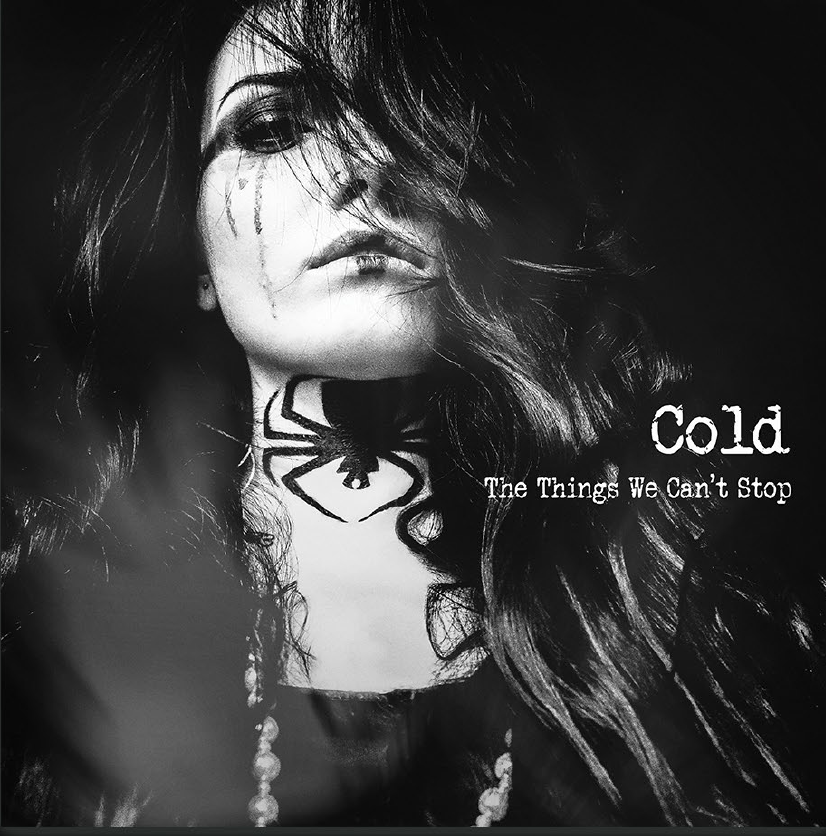
Cold always documented memories and moments in song, etching them forever in diaristic lyrics, cinematic production, and airy guitars. Since their 1997 self-titled debut, the group fronted by singer, songwriter, and multi-instrumentalist SW consistently converted pain into poetry consumed by a legion of diehard fans affectionately dubbed, “Cold Army.”
At the turn of the century, the band unveiled the seminal 13 Ways To Bleed On Stage, which went gold and yielded hits such as “Just Got Wicked,” “No One,” and “End of the World.” The 2003 follow-up, Year of the Spider, marked their highest chart position, bowing at #3 on the Billboard Top 200, receiving a gold certification, and spawning the smash “Stupid Girl” accompanied by Rivers Cuomo of Weezer. 2005’s A Different Kind of Pain illuminated melodic strides to the tune of 37,000-plus copies sold first-week and a Top 30 debut. Meanwhile, 2011’s Superfiction continued this streak, crashing the Top 10 of the Top Rock Albums Chart upon arrival and extending a growing legacy.
After a dormant two-year period, 2017 saw SW turn his attention to Cold through once again surveying the events of an ever-changing journey and relying on the same internal compass responsible for his catalog thus far.
A period of respite and an overwhelming challenge set the stakes high for his next creative development.
“I needed life to happen to be able to create,” he admits. “There were probably around 15 years where all I did was live and breathe the band. I needed to separate from that to remember what it was like to not have it anymore. It was extremely important for me to spend time with my family. I did experience writer’s block for the first time in my life during the process though. It was brutal, because the one thing I’ve always had—left me. It seemed the series of events in my life had taken away my soul. It turned around. I’ve remained adamant about evolving a bit with each record. Approaching every chapter as a new beginning is paramount and necessary for it to be a true Cold album.”
That’s exactly what he made with his 2019 debut for Napalm Records, The Things We Can’t Stop. In order to overcome the drought, he returned to his “alternative roots,” spinning favorite records from The National, Interpol, and Placebo in addition to reading musician biographies. Discovering Nick Cave’s One More Time With Feeling documentary proved eye-opening. Not only did he watch the film over twenty times and develop a deeper appreciation for the artist, but SW credits “him for breaking my block.”
He recorded the album in multiple locations. Drums and bass would be cut in Phoenix with Jeremy Parker at Equinox Studios joined by Nick Coyle [guitar, keys, backing vocals], Lindsay Manfredi [bass], and Aaron Fulton [drums]. The rest of the material came to life at SW’s home studio in California and in the woods of Pennsylvania at Nick’s.
With instrumentation in place, his vision unfolded in classic Cold fashion.
“Every time we begin a record, I wait for the music to tell me what the songs will be about,” he explains. “I can never start a record with a preconceived notion of how it will end. The notes from the piano dictate the stories within the songs. I needed this to be an album with elements from all of the past albums…along with a new sound. As songs started forming, I felt they helped me deal with things happening in my life. They were therapeutic. It seemed powerful in that it took all of the bad things going in my head and gave me hope.
This uplifting spirit courses through the songs. Thick drums and a feedback buzz unlock the opening track “Shine” backed by an encroaching guitar riff. SW’s voice builds from evocative verses into an immediately hummable hook, “I want to see you shine.”
“It’s about dealing with physical abuse at home and becoming triumphant over bullying,” he says. “I faced bullying throughout my early formative years.
I’m hoping it helps someone feel not so alone if they’re going through it right now.”
Meanwhile, the musicians faithfully pay homage to Snow Patrol’s “Run,” adding rich harmonies while preserving the original’s integrity.
“I used to listen to that song every time I had to leave my family to go on tours or away to make albums, and I’ve always been such a fan of the band,” he goes on. “‘Run’ is everything to me, so we really stuck to the script.”
In the end, The Things We Can’t Stop shines a light on life’s tragedy only to color it with beauty as Cold have always done.
“When you listen to this, if you’re going through something tragic, maybe you can take a small bit of hope that you’re not alone,” SW leaves off. “To me, Cold means family. The fans who have stayed with us throughout the years and the people who have worked with us and are all connected through the music. The shows are reunions. These people have become my life. I’m extremely thankful.Cold always documented memories and moments in song, etching them forever in diaristic lyrics, cinematic production, and airy guitars. Since their 1997 self-titled debut, the group fronted by singer, songwriter, and multi-instrumentalist SW consistently converted pain into poetry consumed by a legion of diehard fans affectionately dubbed, “Cold Army.”
At the turn of the century, the band unveiled the seminal 13 Ways To Bleed On Stage, which went gold and yielded hits such as “Just Got Wicked,” “No One,” and “End of the World.” The 2003 follow-up, Year of the Spider, marked their highest chart position, bowing at #3 on the Billboard Top 200, receiving a gold certification, and spawning the smash “Stupid Girl” accompanied by Rivers Cuomo of Weezer. 2005’s A Different Kind of Pain illuminated melodic strides to the tune of 37,000-plus copies sold first-week and a Top 30 debut. Meanwhile, 2011’s Superfiction continued this streak, crashing the Top 10 of the Top Rock Albums Chart upon arrival and extending a growing legacy.
After a dormant two-year period, 2017 saw SW turn his attention to Cold through once again surveying the events of an ever-changing journey and relying on the same internal compass responsible for his catalog thus far.
A period of respite and an overwhelming challenge set the stakes high for his next creative development.
“I needed life to happen to be able to create,” he admits. “There were probably around 15 years where all I did was live and breathe the band. I needed to separate from that to remember what it was like to not have it anymore. It was extremely important for me to spend time with my family. I did experience writer’s block for the first time in my life during the process though. It was brutal, because the one thing I’ve always had—left me. It seemed the series of events in my life had taken away my soul. It turned around. I’ve remained adamant about evolving a bit with each record. Approaching every chapter as a new beginning is paramount and necessary for it to be a true Cold album.”
That’s exactly what he made with his 2019 debut for Napalm Records, The Things We Can’t Stop. In order to overcome the drought, he returned to his “alternative roots,” spinning favorite records from The National, Interpol, and Placebo in addition to reading musician biographies. Discovering Nick Cave’s One More Time With Feeling documentary proved eye-opening. Not only did he watch the film over twenty times and develop a deeper appreciation for the artist, but SW credits “him for breaking my block.”
He recorded the album in multiple locations. Drums and bass would be cut in Phoenix with Jeremy Parker at Equinox Studios joined by Nick Coyle [guitar, keys, backing vocals], Lindsay Manfredi [bass], and Aaron Fulton [drums]. The rest of the material came to life at SW’s home studio in California and in the woods of Pennsylvania at Nick’s.
With instrumentation in place, his vision unfolded in classic Cold fashion.
“Every time we begin a record, I wait for the music to tell me what the songs will be about,” he explains. “I can never start a record with a preconceived notion of how it will end. The notes from the piano dictate the stories within the songs. I needed this to be an album with elements from all of the past albums…along with a new sound. As songs started forming, I felt they helped me deal with things happening in my life. They were therapeutic. It seemed powerful in that it took all of the bad things going in my head and gave me hope.
This uplifting spirit courses through the songs. Thick drums and a feedback buzz unlock the opening track “Shine” backed by an encroaching guitar riff. SW’s voice builds from evocative verses into an immediately hummable hook, “I want to see you shine.”
“It’s about dealing with physical abuse at home and becoming triumphant over bullying,” he says. “I faced bullying throughout my early formative years.
I’m hoping it helps someone feel not so alone if they’re going through it right now.”
Meanwhile, the musicians faithfully pay homage to Snow Patrol’s “Run,” adding rich harmonies while preserving the original’s integrity.
“I used to listen to that song every time I had to leave my family to go on tours or away to make albums, and I’ve always been such a fan of the band,” he goes on. “‘Run’ is everything to me, so we really stuck to the script.”
In the end, The Things We Can’t Stop shines a light on life’s tragedy only to color it with beauty as Cold have always done.
“When you listen to this, if you’re going through something tragic, maybe you can take a small bit of hope that you’re not alone,” SW leaves off. “To me, Cold means family. The fans who have stayed with us throughout the years and the people who have worked with us and are all connected through the music. The shows are reunions. These people have become my life. I’m extremely thankful.